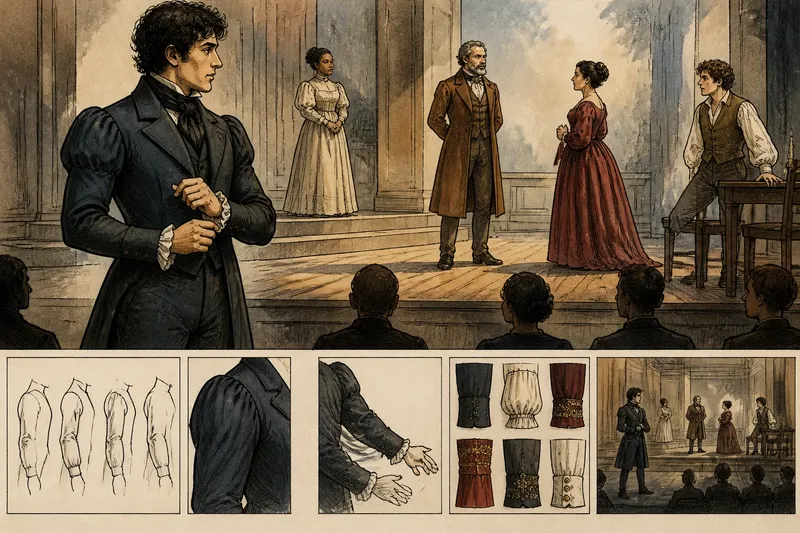
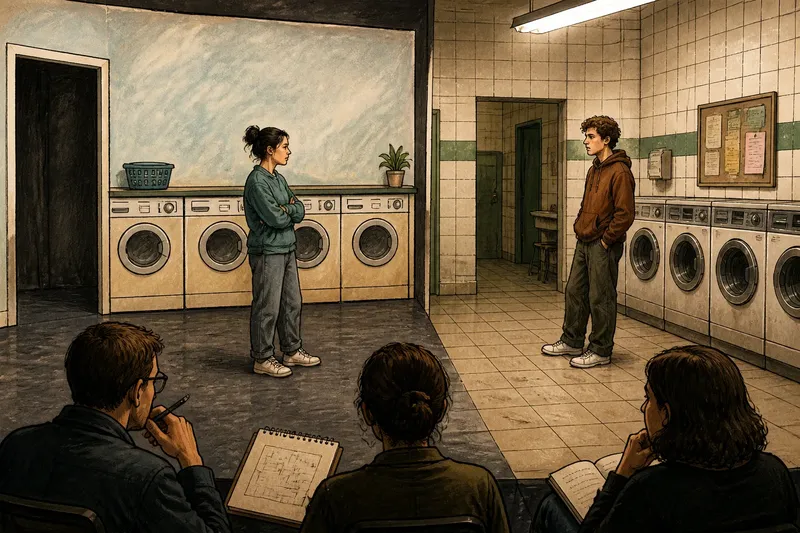
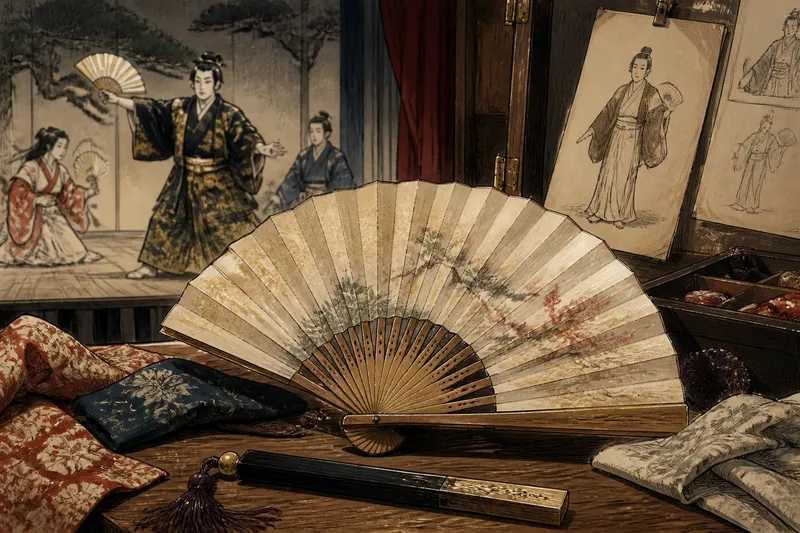
A First-Night Costume Check Under Stage Lights
A first-night costume check helps performers and designers catch distracting silhouettes, reflections, and movement problems before the audience sees the show.
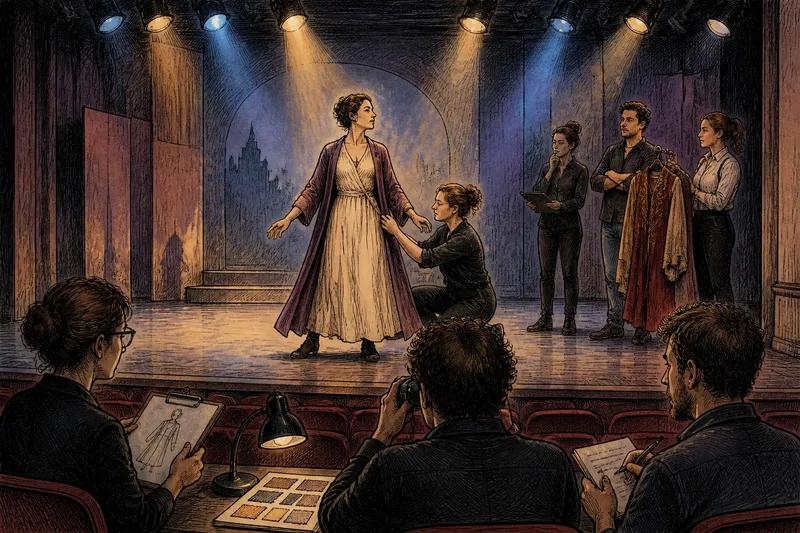
Will your first-night costume read clearly from the seats, under the show’s lights, and through the performer’s movement? A first-night costume check is most useful when it answers that question—not when it tries to make a performer look flawless in a dressing-room mirror. Check the full look in context, then fix only what distracts from the character or the performance.
Bring together the complete costume: shoes, underlayers, jewelry, headwear, and any pieces that come off during the scene. If possible, check it on the performer in a rehearsal space with the costume team’s intended lighting and stage positions. A mirror is useful for construction details, but an observer at audience distance can judge the overall image more accurately.
Define the stage picture
Start with the production’s visual intention. A period drama, a contemporary musical, and a stylized dance piece may use very different silhouettes, textures, and degrees of contrast. The costume should support the character while fitting the set, props, and lighting rather than competing with them.
Check the look from the places the audience will see it: front, profile, and three-quarter view. Consider the performer’s position against the set, the background colors, and whether a scene uses a special lighting state. A beautiful fabric can disappear against a similarly colored backdrop, while a reflective trim may pull focus when a light catches it.
Choose a clear intention for the costume, such as “the lead’s outline stays distinct against the dark set” or “the ensemble reads as one group without looking identical.” Use that intention to assess each detail. If a feature does not help tell the story or clarify the stage picture, consider simplifying it.
Check the costume from the audience’s viewpoint, not only at the dressing-room mirror.
Read the silhouette
At a distance, shape often registers before small decorative details. A long coat, loose shirt, and wide trousers may blur the performer’s outline, especially against a set with similar shapes. Look at the full figure against the actual background before deciding that an individual garment is the problem.
Ask a dresser or designer to observe from the house while the performer stands in a neutral position. Notice whether the costume’s outline supports the character and whether important distinctions between performers remain visible. If the shape feels unclear, change one element at a time, such as opening a jacket or swapping a long outer layer for a shorter one.
Say a performer’s soft blouse, long cardigan, and flowing trousers merge into one shape against a plain set. The costume team opens the cardigan and pins it back temporarily, leaving the other pieces unchanged. From the seats, the expected result is a more visible break at the torso; if that makes the character’s look too casual, the team can instead test a shorter jacket.
Control visual focus
Sequins, bright trim, patterned fabric, and reflective accessories can all be effective, but several competing focal points may make the costume hard to read. Look at the performer under the relevant lighting cue, not just in a bright workroom. A small mirror glance cannot show how a surface behaves across the stage.
Identify the feature the audience should notice first, such as a distinctive collar or a color that separates the lead from the ensemble. Then inspect nearby accessories and surfaces for competing emphasis. If a scarf flashes more strongly than the character’s face, try removing it or choosing a less reflective fabric and view the result from the same seat.
Check for practical distractions too. A necklace that shifts, a loose cuff that catches a prop, or a headpiece that needs frequent adjustment can draw attention away from the scene. Keep one focal point clear and secure everything else for the performance.
Check the lighting response
Stage lighting can change how costume colors and textures appear. Matte cotton, satin, metallic thread, and sequins respond differently as the performer moves through a light. Review the costume in the production’s available lighting states, including any change that matters to the scene.
Ask the lighting operator or designer to bring up the relevant cue while the performer stands against the set. Look for details that vanish, merge with the background, or reflect more strongly than intended. If a dark jacket disappears against a dark wall, compare a lighter layer or a change in trim before revising the whole costume.
Do not rely on a phone image to settle a color question; its display may not represent what the audience sees. Make the decision from the stage or house view, and coordinate changes with the costume and lighting teams so one adjustment does not create a new problem elsewhere.
Review color and shine in the actual stage picture whenever the space and schedule allow.
Test movement and handling
A costume that looks settled in a still pose may shift during a dance, a turn, or a quick prop handoff. Run the movements the performer actually needs: sit and stand if the scene calls for it, reach for the prop, cross the stage, and make any planned turns. Watch the hem, sleeves, closures, and layers as they move.
If fabric catches on a chair or a sleeve snags a prop, identify the contact point before changing the whole design. A dresser may adjust a closure or secure a loose layer; if the fix is uncertain or affects construction, consult the costume supervisor or a qualified tailor. Do not ask a performer to push through a movement that feels painful or unsafe.
For a quick check, have the performer repeat the specific action that exposed the issue while an observer watches from the side. If the problem recurs, pause and revise the costume or choreography in coordination with the relevant team; if it does not, confirm the action again with the intended prop and shoes.
What should the costume team check?
How can a costume disappear against the set?
View the performer from the house with the intended set and lighting in place. If the outline blends into the background, try a contrasting layer or detail and compare the stage picture before choosing a change.
How do I spot distracting reflections?
Watch the performer move through the relevant lighting cue from an audience seat. If a surface flashes more strongly than the story calls for, test a matte alternative or reduce the reflective area.
What should I test with a prop?
Have the performer handle the actual prop using the scene’s planned movement. If a sleeve, pocket, or accessory catches or obstructs the action, adjust that point and repeat the movement before approving the costume.
When should a costume change go to a tailor?
Ask a qualified tailor or costume supervisor about changes involving fit, secure construction, or unfamiliar repairs. If the issue can be resolved with a removable accessory or a known dressing adjustment, test that simpler option first.
Complete the stage check
Use this final pass to make a decision about each visible or practical issue:
- Check whether the costume outline separates from the set; if it does, keep the silhouette, but if it blends in, test a contrasting layer or trim.
- Check whether the intended character detail reads from the house; if it does, leave it, but if it disappears, adjust its placement or contrast.
- Check whether reflective fabric pulls focus under the cue; if it supports the design, keep it, but if it distracts, try a matte or smaller surface.
- Check whether the performer can complete the scene’s required movement comfortably; if so, proceed, but if fabric pulls or catches, revise the garment or consult the costume supervisor.
- Check whether the performer can reach and use each prop in costume; if so, confirm the setup, but if an accessory obstructs the action, secure or remove it and repeat the handling.
- Check whether closures and headwear stay in place during movement; if they do, approve the setup, but if they shift, ask the dresser to adjust them or seek a construction fix.
- Check whether the outer layer or quick-change pieces interfere with the next entrance; if they clear the transition, keep the arrangement, but if they snag or delay it, coordinate a revised dressing plan.
Imagine the stage manager notes that a performer’s dark coat blends into the painted doorway during a scene change. The costume team checks the performer from the house under that cue, then temporarily adds a narrow, removable strip of lighter trim and runs the entrance again. If the outline becomes easier to follow without pulling attention from the scene, they can ask the costume supervisor to approve a durable version; if the trim looks too prominent, they can test a lighter layer or adjust the lighting with the designer.
Once the approved costume reads clearly, supports the scene, and allows the planned action, stop making changes for the sake of another mirror check. A first-night costume check should leave the performer and crew with a clear visual decision and a setup they can repeat reliably at the next entrance.