The Blue-Light Myth: Why Color Alone Does Not Set a Mood
Blue stage lighting can feel calm, urgent, or mysterious. Learn how beam shape, movement, and color interactions help you build a clear stage picture.
Does blue stage lighting make a scene feel sad, cold, or mysterious? Its effect depends less on a fixed emotional label than on the beam’s shape, the performers’ movement, and the way light changes the stage picture. Start by deciding what the audience should notice and feel in that moment.
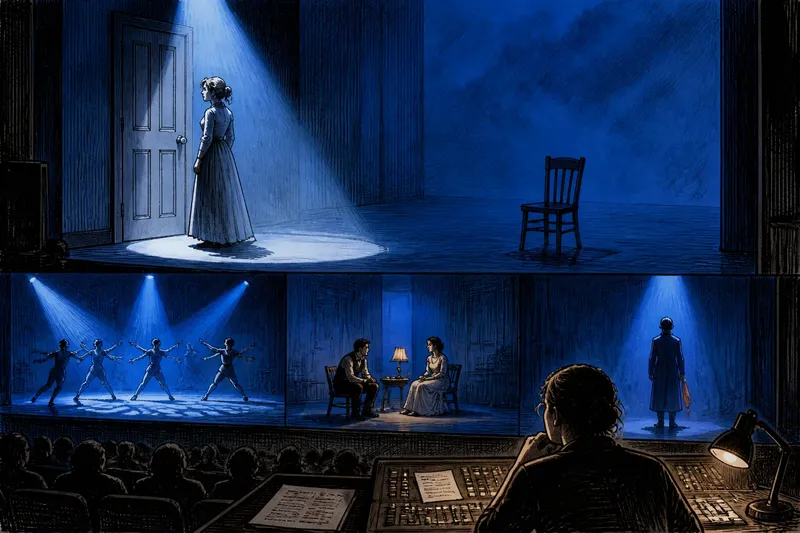
For example, a narrow blue shaft can make a doorway feel like a destination, while a broad wash can turn the whole stage into an open field. Those are different visual jobs, even if the color stays the same.
Shape the beam
Beam shape directs attention before color suggests mood. A tight special can isolate a performer or an object; a broad wash can connect separate parts of the stage and make the space feel larger.
Imagine an invented scene with a performer standing beside a closed door, a chair several feet away, and a blue wash covering both. First, narrow the light to the performer and the door, leaving the chair in shadow; the expected result is a focused image that makes the door feel important. Next, widen the beam to include the chair; the expected tradeoff is a less isolated performer but a clearer sense of the room around them.
Make the beam’s edge and direction serve the action, rather than treating a color choice as a complete cue.
Use movement and contrast
Movement changes how a blue cue reads. A still performer under even light may appear calm or withdrawn, while dancers crossing a sharply defined blue beam can make the same hue feel brisk and active.
Contrast can come from brightness and shadow, not just from adding another color. A blue-lit area beside a darker section gives the eye a path to follow; an even wash may make a busy stage picture feel visually flat.
When blocking changes, check whether the light still guides attention to the action.
Balance the color palette
Blue interacts with costumes, scenery, and props. On a pale costume, it may create a crisp outline; on a dark jacket against a dark backdrop, the performer may lose separation. A warm-colored prop can also stand out strongly against a blue field, changing which detail catches the eye first.
Check the stage from the audience’s point of view, not only from the lighting position. If a face or object disappears, adjust its angle, separation from the background, or the surrounding brightness before changing the whole color scheme.
Check the audience view
Look for the specific visual problem a cue creates: an unclear expression, a lost hand gesture, or a prop that blends into a costume. Then make one focused adjustment and check whether the important detail becomes easier to read.
- Observation: A face looks murky from the house. If the eyes and expression are hard to read, then adjust the light’s angle or level; if the face becomes readable, keep the blue, but if it remains obscured, add a suitable face light or revise the cue.
- Observation: A dark costume disappears against the backdrop. If the performer loses a clear outline, then create separation with beam placement or a brighter background; if the outline returns, retain the palette, but if not, change the costume or lighting relationship.
- Observation: A handheld prop is difficult to see. If it matters to the action, then redirect light toward the hand or prop; if it reads clearly, preserve the cue, but if it still blends in, alter its position or color contrast.
- Observation: The stage looks flat. If performers and scenery have similar brightness, then introduce a clear difference in light or shadow; if depth appears, keep that balance, but if the picture remains flat, reshape the beams or separate the stage areas.
- Observation: A blue cue seems too forceful for a quiet exchange. If the beam is sharply defined or the light dominates faces, then soften its edge or reduce its prominence; if the scene settles, retain the hue, but if it still feels tense, reconsider the color and surrounding contrast.
- Observation: A lively passage feels subdued. If movement is hard to follow under an even wash, then define the movement path with a shaped beam; if the action becomes clearer, keep the blue, but if it does not, revise the blocking or cue timing.
Which blue cue fits?
Does blue light always feel cold?
No. A blue wash can feel inviting if the performers’ behavior, surrounding colors, and setting support that impression. The beam’s shape and the action help determine what the audience notices.
Should a sad scene use dim blue?
Not necessarily. A restrained cue may suit a quiet moment, but dimness can also hide expressions or important gestures. Keep the emotional intention and visibility of the action in balance.
Can bright blue feel calm?
Yes. A broad, even field over a still stage can feel composed, while the same brightness in a sharp moving beam may feel more active. Shape and movement change the effect.
What should change if blue looks wrong?
Name the visible problem first: lost detail, a flat picture, or a beam that pulls attention away from the action. Adjust the beam’s placement, shape, or contrast, then reconsider the hue only if the problem remains.
Choose the visual job
Blue stage lighting works best when its shape supports the action: isolate a performer, connect a group, or give movement a clear path. Keep the audience’s view in mind, especially when faces, gestures, or props carry the scene.
Before settling a cue, watch one complete passage from the house and note where your eye goes first. If it lands on the intended performer or object, the light is doing useful work; if not, revise the beam’s direction or focus before reaching for a new color.