How Stage Fans Became More Than Hand Props
Stage fan history traces how a practical object gained dramatic force, helping you shape a fan’s movement, design, and place in a production.
Why does a stage fan sometimes seem to change the whole scene? Stage fan history offers no single answer: its use has shifted with the performance tradition, from moving air to shaping gesture, movement, and stage imagery.
The fan’s theatrical story is not a universal code in which one motion always means the same thing. Its history is better understood through specific forms of performance and the jobs the object was asked to do within them.
Air and action
A fan’s first clear stage function is physical: it moves air. That practical action can also make heat or discomfort visible to spectators, while giving a performer something to do during a pause.
Once a fan is handled in view of an audience, its movement becomes part of the stage picture. Opening, closing, or setting it aside can mark a beat in the action, but the meaning comes from the scene rather than from a fixed rule.
Fans in Japanese theatre
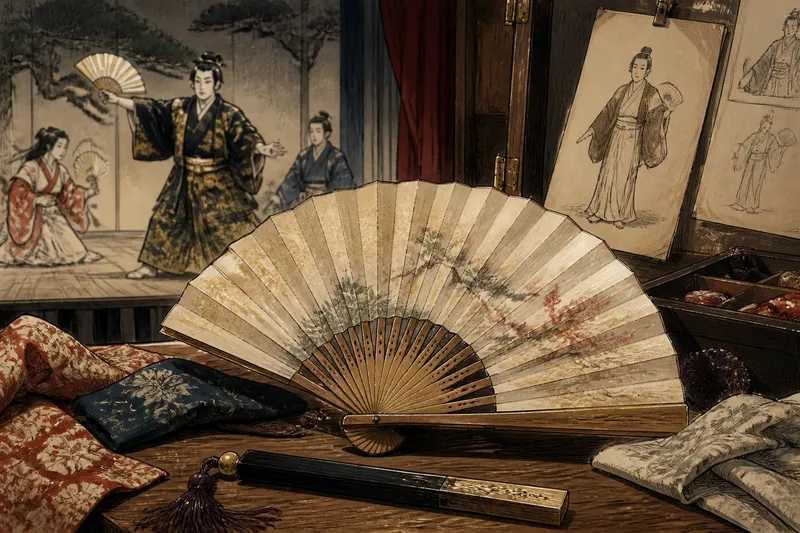
In Japanese theatre, the fan is a prominent stage object in forms including kabuki and noh. Performers use it as part of stylized movement, and a fan can suggest an object or action through the way it is held and moved. The conventions belong to particular performance forms; they should not be treated as a universal dictionary for fans on every stage.
This theatrical use gives the fan a role beyond costume decoration. It can contribute to the performer’s movement and to the audience’s reading of a scene, with the form and context guiding interpretation.
From accessory to image
In other settings, a fan may be chosen for its fit with a character’s belongings, a formal social scene, or a dance. A production can also use those associations unexpectedly, making an apparently familiar accessory feel comic or uneasy.
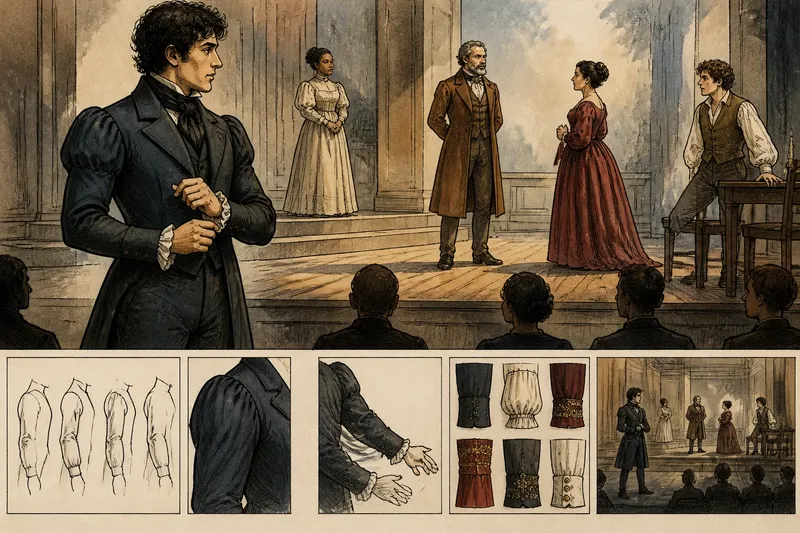
Imagine a director staging a quiet drawing-room exchange: a character opens a fan during a pause, then closes it when another person enters. The opening gives the actor a measured action; the closing marks a change in attention. The fan does not need a universal meaning to make that transition legible.
Different stage languages
In realist acting, the fan may be treated as an ordinary possession, handled casually or set down without emphasis. In stylized work, its shape and movement may be made clearer so spectators can follow the gesture from across the room.
In dance, an open fan can create a strong visual shape or redirect the audience’s gaze. In comedy, a stubborn hinge or mistimed opening can support a joke. These are different uses, not stages in a single historical progression.
Choosing a stage fan
Begin with the scene’s actual need: airflow, a character’s routine, a movement sequence, or a visible action during a pause. Then check how the prop works in the space and what the performer must do with it.
- Visibility: If the fan’s movement is hard to see from the audience area, then choose a clearer shape or simplify the gesture; otherwise, keep the design that supports the scene.
- Opening action: If the performer struggles to open it on cue, then select a prop they can handle reliably or adjust the action; otherwise, retain the planned opening.
- Sound: If a snap or rustle competes with dialogue, then choose a quieter prop or change the timing; otherwise, let the sound remain part of the moment.
- Movement: If the fan catches on clothing or interrupts a dance phrase, then revise the choreography or use a more suitable prop; otherwise, keep the established movement.
- Continuity: If the actor cannot repeat where the fan is placed after use, then mark a clear position and rehearse the transition; otherwise, preserve the existing placement.
- Scene purpose: If the fan has no clear action or relationship to the scene, then remove it or give it a specific task; otherwise, keep it as a deliberate part of the staging.
For a fan used in movement, follow the prop maker’s instructions and the production’s safety practices. Construction and handling needs vary, so consult the appropriate production professional if the prop’s suitability is uncertain.
What do audiences ask?
Did every stage fan mean flirtation?
No. A fan could move air, support stylized movement, or belong to a character’s routine. Flirtation is one possible interpretation, shaped by the scene and its performance tradition.
How can a fan show emotion?
The performer can change its pace, direction, or placement in response to a specific event. A closing gesture after a remark, for instance, can make a shift in attention visible without assigning that motion one permanent meaning.
Why use a fan if it does not change the plot?
A prop can shape rhythm and focus without changing what happens next. Folding a fan during a tense pause gives the audience a visible action to follow as the conversation continues.
Does the fan’s design affect its meaning?
Design affects how prominent the fan appears and how its movement reads from the audience area. Its dramatic purpose still depends on the performer’s action and the context of the scene.
A specific stage history
Stage fan history is not a tale of one gesture spreading unchanged across theatre. Fans have served practical, formal, and stylized purposes in distinct settings, including Japanese theatrical forms where the object participates in movement. For a production designer, the useful question is what the fan does in this scene—and whether the audience can see that action clearly.
When a fan’s role is settled, give it a consistent place when it leaves the performer’s hand. That small piece of blocking helps the prop remain part of the stage picture instead of becoming an unexplained distraction.